

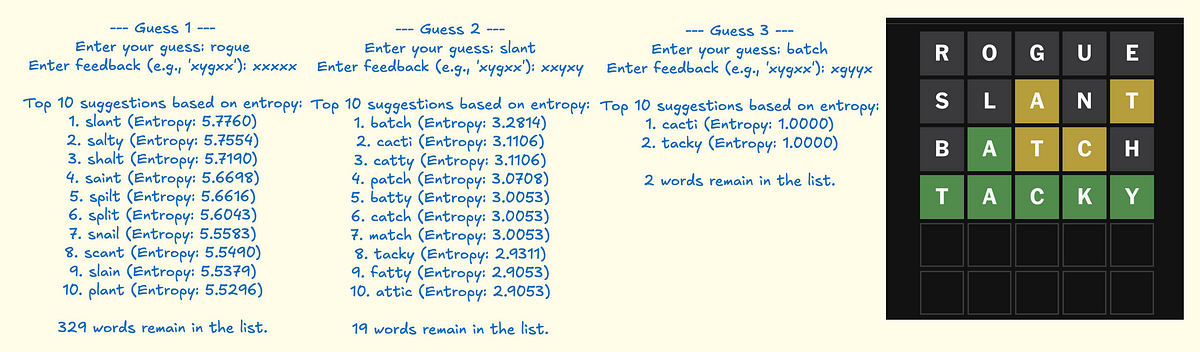

Wordle is an addictive online daily word puzzle game developed by The New York Times.
The rules are simple. The players get six chances to guess a five-letter word. Wordle gives you feedback on each guess you make by highlighting the letters in your guessed word with green, gray, and yellow colors.
The green color denotes that you made the right guess for the given letter and position. The yellow color indicates that the letter is present in the word but is misplaced. The gray color means the letter is absent in the word.
A perfect guess will result in all five letters turning green. An awful guess could result in all gray letters. If a guess is partly correct, you may see a mix of yellow and gray letters, suggesting some letters are present but misplaced.
I’m sure many readers have played Wordle before, but you can try it here if you haven’t.

Due to its interesting feedback loop that helps narrow down the list of possible words, Wordle is a perfect example of how concepts from Information Theory can enhance decision-making. I play the game for fun, but the nerd guy inside me wants to dive deeper into the “why” behind my guesses. What makes some guesses…